
Have you ever wondered why avocados have taken the culinary and wellness worlds by storm? From trendy avocado toast to creamy smoothies, this vibrant green fruit is much more than just a delicious addition to your meals. The nutrients in avocados create a nutritional powerhouse that can transform your well-being.
Unlike most fruits that consist primarily of carbohydrates, avocados are uniquely high in healthy fats, making them an unparalleled superfood.
To read more articles, visit https://healthywithayesha.com/
In this comprehensive guide, we are going to explore the 12 nutrients in avocados that support better health. Whether you want to improve your
- heart health,
- boost your digestion
- enhance your glowing skin,
Understanding the exact vitamins, minerals, and antioxidants packed into every slice will help you make the most of your diet.
Why Avocado Nutrition Stands Out
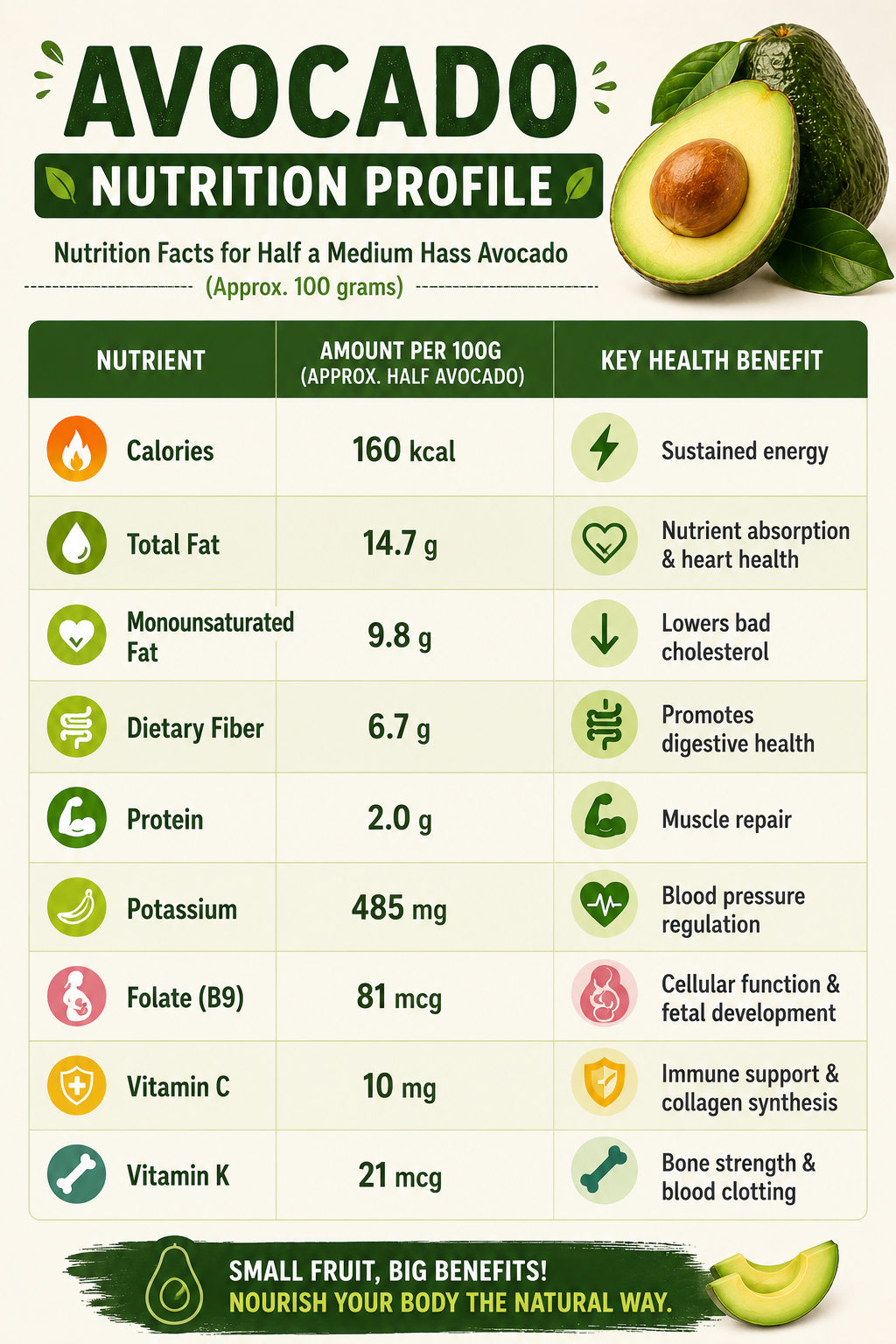
Avocados—specifically the popular Hass variety—are nutrient-dense, meaning they provide a substantial amount of vitamins, minerals, and other health-promoting compounds with relatively few calories.
- A typical serving (about one-third to one-half of a medium avocado) offers an incredible array of bioactive compounds.
- They are naturally sodium-free, cholesterol-free, and contain virtually no sugar.
- Research from the Journal of the American Heart Association shows that individuals who eat two or more servings of avocado per week have a 16% lower risk of cardiovascular disease.
This statistic highlights just how impactful the nutrients in avocados can be when incorporated into a balanced lifestyle.
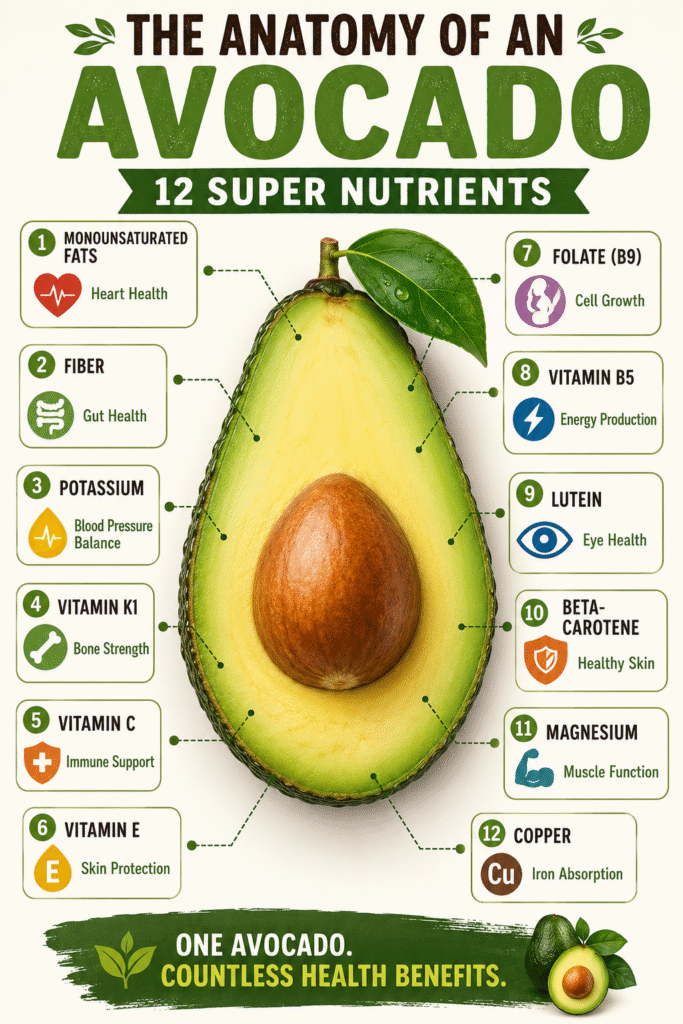
Let’s dive deep into the specific 12 nutrients in avocados that support better health and learn exactly what they do for your body.
Want healthier meals every day? Discover our 7 Healthy Cooking Methods That Preserve Nutrients and Flavor
The 12 Essential Nutrients in Avocados
1. Oleic Acid (Monounsaturated Fats)
While the word “fat” used to scare health enthusiasts, we now know that healthy fats are essential. More than 75% of the fat found in an avocado is of the unsaturated type. The primary fat is oleic acid, a monounsaturated fatty acid that is also the main component of olive oil.
Health Benefit:
- Oleic acid helps reduce inflammation and has been shown to have beneficial effects on genes linked to cancer.
- Furthermore, replacing saturated fats with monounsaturated fats helps lower LDL (“bad”) cholesterol levels, significantly supporting cardiovascular health.
If you’re trying to adopt a healthier eating plan, don’t forget to look at a high-protein, anti-inflammatory meal plan
2. Dietary Fiber
One of the most impressive nutrients in avocados is their dietary fiber content. Half of a medium avocado contains nearly 7 grams of fiber, which is roughly 25% of the recommended daily intake. Avocados have both types of fiber, soluble and insoluble.
Health Benefit:
- Insoluble fiber adds bulk to your stool, preventing constipation and keeping your digestive tract moving.
- Soluble fiber feeds the friendly gut bacteria in your intestine, promoting a diverse and healthy microbiome. This contributes to improved digestion, stable blood sugar levels, and prolonged feelings of fullness, which support weight management.
New to matcha? Start with our complete beginner’s guide before trying these delicious recipes. 8 Delicious Matcha Drink Recipes You’ll Love
3. Potassium
When it comes to potassium, many people automatically think of bananas. But actually, they contain more potassium than bananas do. Half an avocado provides roughly 345 to 360 milligrams of potassium.
Health Benefit:
- Potassium is a critical mineral and electrolyte that helps regulate fluid balance, muscle contractions, and nerve signals.
- The American Heart Association notes that potassium helps control blood pressure by blunting the adverse effects of sodium.
- Adequate potassium intake is heavily linked to a reduced risk of stroke and hypertension.
4. Folate (Vitamin B9)
Folate is a B vitamin that is essential for normal cell function and tissue growth. Half an avocado delivers roughly 20% of the daily recommended amount of folate.
Health Benefit:
- Folate is famous for its role in supporting fetal health and preventing neural tube defects during pregnancy.
- However, it is equally important for everyone else, as it helps synthesize DNA, form red blood cells, and regulate moods by supporting brain health.
5. Vitamin K1
Often overlooked in favor of vitamins C and D, Vitamin K1 is highly concentrated in avocados. A single serving provides over 15% of your daily needs.
Health Benefit:
- Vitamin K1 is essential for blood clotting, preventing excessive bleeding from minor cuts.
- More importantly, it plays a vital role in bone health by increasing calcium absorption and reducing the urinary excretion of calcium, lowering your risk of osteoporosis.
6. Vitamin E
Vitamin E is a powerful fat-soluble antioxidant. Because avocados are naturally high in fat, the vitamin E they contain is easily absorbed by your body.
Health Benefit:
- This nutrient protects your body’s tissues from free radical damage.
- It keeps your immune system strong against viruses and bacteria, and it helps maintain healthy skin and eyes.
7. Vitamin C
While we often associate Vitamin C with citrus fruits, avocados are a surprisingly good source. Half an avocado provides about 10% of your daily value.
Health Benefit:
- Vitamin C is required for the biosynthesis of collagen, L-carnitine, and certain neurotransmitters.
- It also acts as a strong antioxidant that aids the immune system and assists the body in absorbing iron from plant foods.
8. Magnesium
Magnesium is known as the relaxation mineral, and a serving of avocado offers a mild increase in this essential nutrient.
Health Benefit:
- Magnesium is involved in over 300 biochemical reactions in your body.
- It helps convert food into energy, creates new proteins from amino acids, helps repair DNA and RNA, and regulates neurotransmitters that send messages throughout your brain and nervous system.
9. Vitamin B6 (Pyridoxine)
Vitamin B6 plays an important role in the body’s process of breaking down and using proteins, fats, and carbohydrates.
Health Benefit:
- It plays a major role in creating red blood cells and neurotransmitters, including serotonin and dopamine.
- By supporting healthy brain development and function, Vitamin B6 helps regulate your mood and cognitive abilities.
10. Lutein
Lutein is a carotenoid—a plant chemical with potent antioxidant properties. Avocados are uniquely rich in lutein compared to other common fruits.
Health Benefit:
- Lutein concentrates in the macula of the human eye. It acts as a natural sunblock, protecting the eye from harmful ultraviolet and blue light damage.
- A diet rich in lutein is strongly associated with a lower risk of age-related macular degeneration.
11. Zeaxanthin
Often working in tandem with lutein, zeaxanthin is another crucial carotenoid found in avocados.
Health Benefit:
- Like lutein, zeaxanthin protects eye tissues from sunlight damage and oxidative stress.
- Interestingly, because these carotenoids are fat-soluble, the natural fats in the avocado ensure your body absorbs them efficiently.
12. Pantothenic Acid (Vitamin B5)
Pantothenic acid is found in almost all plant and animal foods to some degree, but avocados are an excellent source.
Health Benefit:
- Vitamin B5 helps your body convert the food you eat (carbohydrates, proteins, and lipids) into usable energy.
- It is also essential for manufacturing red blood cells, as well as sex and stress-related hormones produced in the adrenal glands.
Real-Life Example: The Nutrient Absorption Booster
Let’s look at a real-life example of how the nutrients in avocados function synergistically.
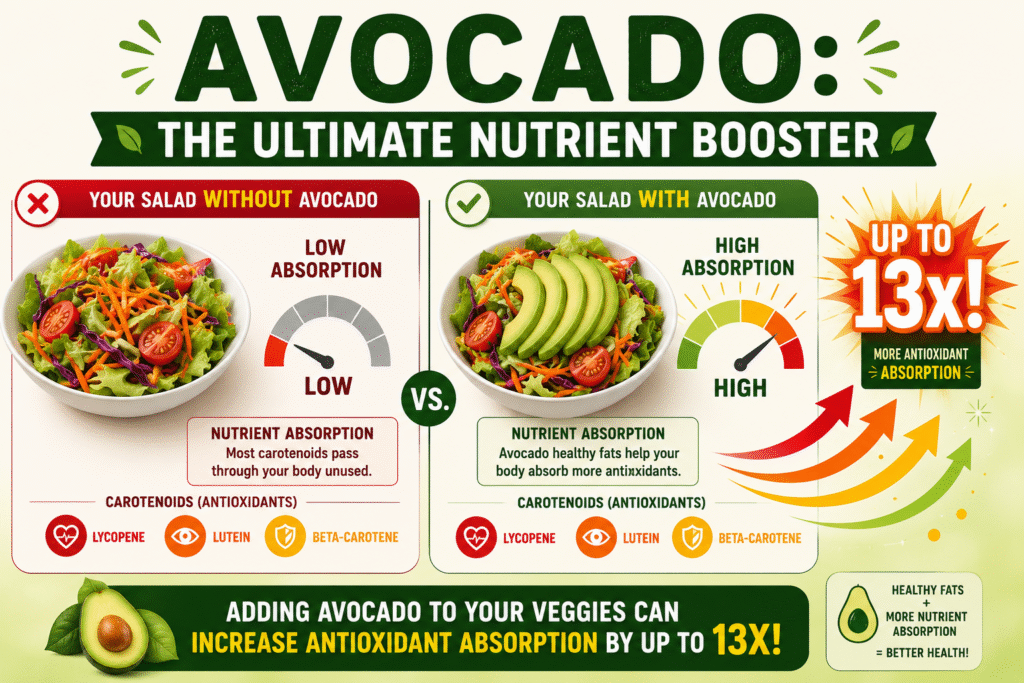
Consider Sarah, a 35-year-old who eats a healthy bowl of spinach, carrots, and tomatoes every day for lunch. These vegetables are packed with fat-soluble vitamins (like Vitamin A, D, E, and K) and carotenoids. However, without fat, her body struggles to absorb them.
Once Sarah started adding half an avocado to her daily salad, she wasn’t just getting the nutrients in the avocado itself. Research shows that adding avocado to a salad can increase the absorption of antioxidants like beta-carotene by up to 13 times! The healthy fats in the avocado act as a “nutrient absorption booster,” transforming her regular salad into a highly bioavailable super-meal.
Looking for simple ways to eat healthier? Discover the 7 healthy eating habits that transformed my daily routine.
Practical Tips for Including More Avocados in Your Diet
Morning Boost: Mash avocado on whole-grain toast instead of butter, and top it with a sprinkle of sea salt and a poached egg.
Creamy Smoothies: Add a quarter of an avocado to your morning fruit smoothie. It adds a silky, creamy texture without overpowering the taste of the fruit.
Healthy Baking: Substitute avocado for butter in baking recipes like brownies or muffins. It provides the necessary fat for a moist texture but upgrades the nutritional profile.
Salad Upgrade: Dice them into your leafy greens to ensure you are absorbing all the fat-soluble vitamins from your vegetables.
Conclusion
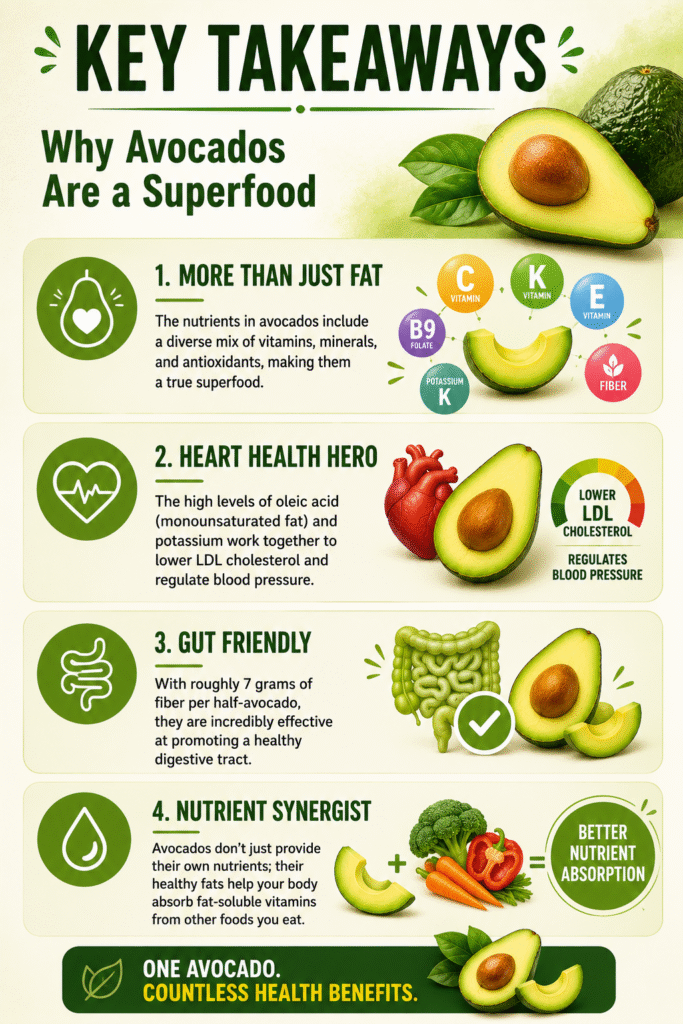
Incorporating this delicious green fruit into your daily meals is one of the easiest and most flavorful ways to upgrade your diet. The nutrients in avocados—from heart-healthy monounsaturated fats and blood-pressure-lowering potassium to vision-protecting lutein and digestion-boosting fiber—prove that this superfood is entirely worthy of the hype. By understanding the 12 nutrients in avocados that support better health, you can make informed choices that nourish your body from the inside out.
Ready to transform your diet? Start today by adding a few slices of avocado to your next salad, sandwich, or smoothie, and experience the benefits of this nutritional powerhouse for yourself!
It’s about eating wholesome, satisfying meals that naturally keep your calorie intake in check while fueling your body with essential nutrients. You can check Low-Calorie Recipes for Weight Loss.
Frequently Asked Questions (FAQs)
1. Does eating avocado make you gain weight? While avocados are calorie-dense due to their fat content, they are very satiating. The high fiber and healthy fats keep you feeling full longer, which can actually prevent overeating. Consumed in moderation, they are excellent for weight management.
2. How much avocado should I eat a day? Most nutritionists recommend eating about one-third to one-half of a medium avocado per day as part of a balanced diet.
3. Can I eat the avocado seed? While some holistic practices suggest drying and blending the seed, the California Avocado Commission and most health experts recommend sticking to the fleshy green part of the fruit, as the seed’s safety and nutritional benefits are not heavily established in human trials.
4. Why do avocados turn brown, and are they safe to eat? Avocados turn brown due to an enzyme reacting with oxygen (oxidation). While a slightly brown avocado might look unappetizing, it is perfectly safe to eat. You can prevent browning by squeezing lemon or lime juice over the exposed flesh and storing it in an airtight container.


Great content! Keep up the good work!
thanks!