Think about the last time you spent extra money at the grocery store buying organic vegetables, fresh wild-caught fish, and premium lean proteins. You safely assumed you were making a phenomenal choice for your body.
However, if you brought those ingredients home and boiled them into a mushy, pale oblivion or deep-fried them in highly oxidized oils, you stripped away the very health benefits you paid for. The reality is that your choice of healthy cooking methods determines the ultimate nutritional value of the food on your plate.
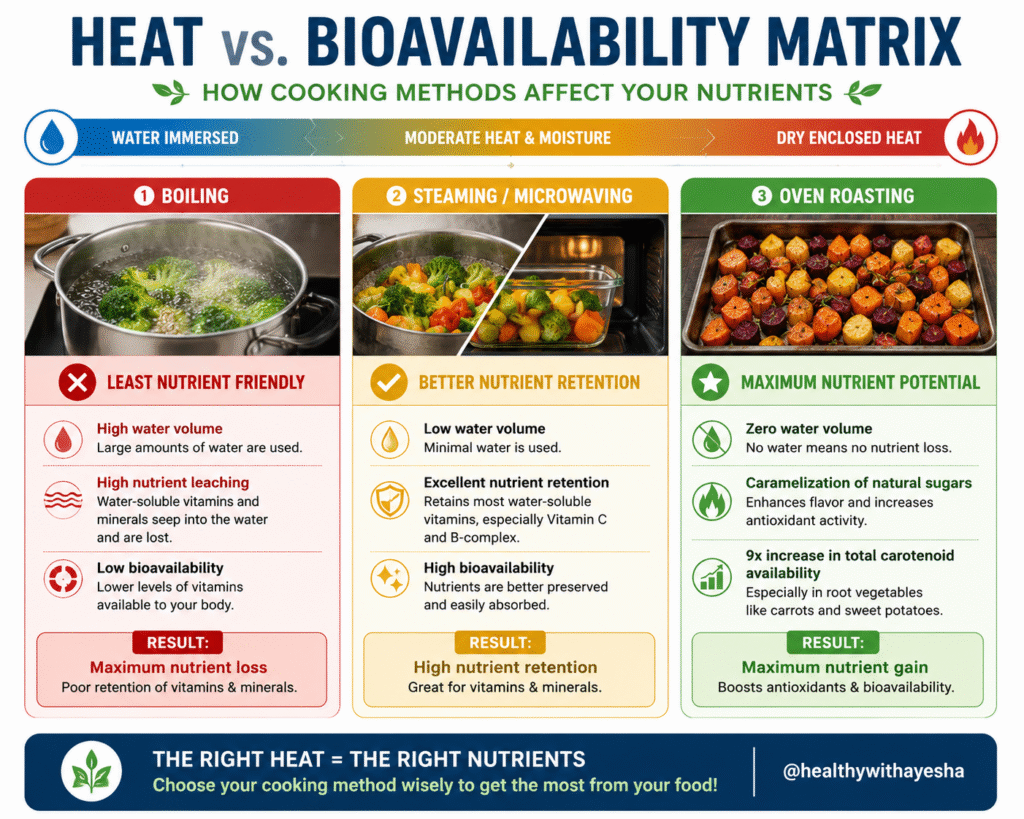
Conventional, aggressive cooking techniques can leach up to 50% or more of vital water-soluble vitamins down the kitchen sink. Food preparation is a delicate balance of science and culinary art. Applying heat alters the molecular structure of food, making certain nutrients more easily absorbed while destroying others. To bridge this gap, you must master cooking techniques that safeguard vitamins, minerals, and volatile flavor compounds simultaneously.
To read more articles, visit https://healthywithayesha.com/
In this comprehensive guide, we will explore 7 exceptional healthy cooking methods that lock in maximum health benefits without sacrificing taste. Whether you are a dedicated home chef or a busy parent looking to optimize your family’s meals, understanding these science-backed techniques will permanently transform how you approach nutrition in the kitchen.
The Chemistry of Heat: Why Food Loses Nutrients
Before diving into the specific techniques, you must understand the primary culprits behind nutrient loss during food preparation:
- heat
- water exposure
- cooking duration
- oxygen
When you subject fresh food to these elements, specific chemical changes occur.
Nutrients fall primarily into two categories: water-soluble and fat-soluble.
Water-Soluble Nutrients: This group includes Vitamin C and the entire B-vitamin complex (such as folate, thiamine, riboflavin, B6, and B12). These compounds are highly unstable and exceptionally sensitive to heat and water. When you submerge food in boiling water, these vitamins dissolve into the liquid. If you pour that water down the drain, you discard the primary health value of the food.
Fat-Soluble Nutrients: This group includes Vitamins A, D, E, and K, along with powerful antioxidants like carotenoids (beta-carotene, lycopene, and lutein). These compounds are much more stable when exposed to water and heat. In fact, gentle cooking breaks down tough plant cell walls, significantly increasing the bioavailability of these nutrients. However, they dissolve easily when cooked in excessive amounts of fat or oil.
A landmark study published in the Journal of Agricultural and Food Chemistry revealed that different preparation techniques completely alter the antioxidant capacity of vegetables.
For instance, boiling caused a massive drop in total antioxidants in zucchini and carrots, whereas alternative heat applications preserved or even enhanced those identical protective compounds.
By strategically selecting your kitchen techniques, you control this biochemical process to your advantage.
New to matcha? Start with our complete beginner’s guide before trying these delicious recipes. 8 Delicious Matcha Drink Recipes You’ll Love
7 Healthy Cooking Methods That Protect Your Food
Let’s look at the seven best ways to prepare food to ensure your body gets the vitamins it needs while your palate gets the flavor it craves.
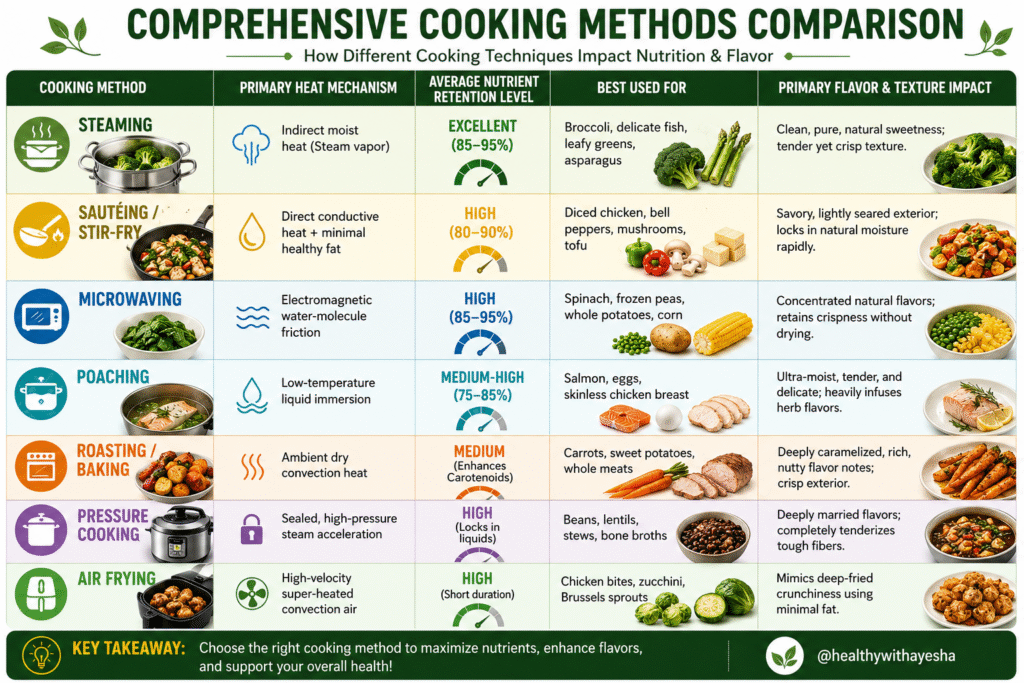
1. Steaming: The Gold Standard of Nutrient Retention
When it comes to preserving nutrients, steaming reigns supreme; it relies on indirect heat via water vapor. Because the food rests in a perforated basket safely suspended above a boiling liquid, it never makes direct contact with the water.
Why It Excels for Health and Flavor
Because the ingredients do not submerge in liquid, water-soluble vitamins stay safely locked within the vegetable’s cellular walls. Steaming also operates at a consistent temperature of 212°F (100°C), which is hot enough to cook food rapidly but gentle enough to avoid structural charring. Clinical nutrition research demonstrates that steaming maintains 85% to 95% of Vitamin C in cruciferous vegetables like broccoli, Brussels sprouts, and cabbage.
Furthermore, steaming preserves the natural, vibrant colors of your food by preventing the degradation of chlorophyll. This makes your meals visually striking and naturally sweet or earthy, requiring far less added salt or butter to taste delicious.
Best Foods For This Method
Cruciferous Vegetables: Broccoli, cauliflower, kale, and bok choy.
Delicate Seafood: White fish fillets, shrimp, and scallops.
Root Vegetables: Sliced sweet potatoes and thin-cut carrots.
2. Stir-Frying and Sautéing: Fast Heat, High Bioavailability
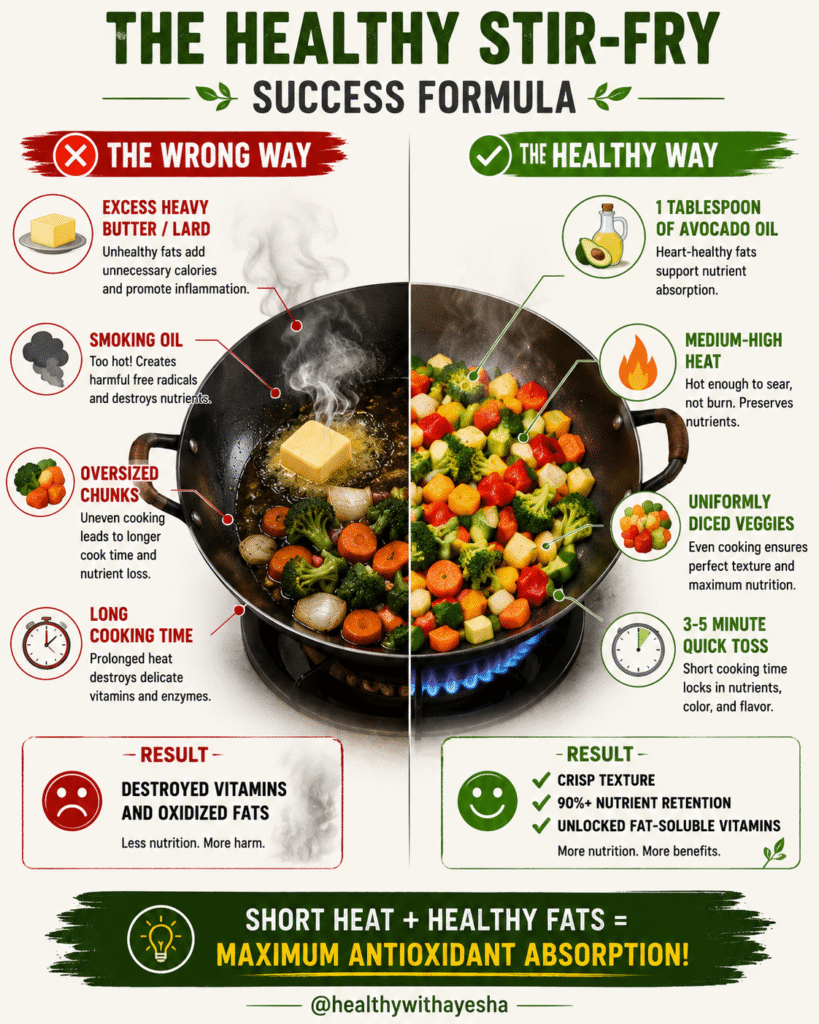
Stir-frying and sautéing involve cooking bite-sized pieces of food rapidly over medium-to-high heat in a wide pan or wok. While this method requires a small amount of cooking oil, it remains one of the most effective healthy cooking methods available when executed correctly.
Why It Excels for Health and Flavor
The true magic of a proper stir-fry lies in the combination of minimal time and the strategic inclusion of healthy fats. Because the cooking process concludes in just three to five minutes, the thermal degradation of heat-sensitive nutrients is negligible.
More importantly, adding a healthy, high-smoke-point oil (such as avocado oil or extra virgin olive oil) acts as a delivery vehicle for lipophilic (fat-soluble) nutrients.
Research indicates that cooking carrots and tomatoes with a small amount of monounsaturated fat increases your body’s absorption of beta-carotene and lycopene by up to several hundred percent. The rapid tossing action also sears the exterior of the ingredients quickly, locking in their natural juices and creating a crisp, satisfying texture.
Best Foods For This Method
Mixed Vegetables: Bell peppers, snap peas, mushrooms, and onions.
Lean Proteins: Thinly sliced chicken breast, tofu cubes, and flank steak strips.
3. Microwaving: The Surprising Health Hero
For decades, misconceptions plagued the humble microwave oven. Skeptics claimed that microwave radiation altered food chemistry or destroyed its nutritional fabric.
Modern food science has soundly debunked these myths, revealing that microwaving is actually one of the absolute best healthy cooking methods for nutrient conservation.
Why It Excels for Health and Flavor
Microwaves heat food by causing water molecules within the ingredients to vibrate rapidly, generating internal friction and heat. Because this process is highly efficient, it cooks food faster than almost any other method.
The formula for preserving vitamins is simple:
- use minimal water
- minimal heat exposure time.
Microwaving requires almost zero added water and finishes cooking in a fraction of the time required by a stovetop. A comparative study analyzing different preparation methods found that microwaving retained the highest concentration of water-soluble folate and Vitamin C in green vegetables, outperforming boiling by an incredibly wide margin. It keeps flavors clean and concentrated since no flavors dilute into a large pot of water.
Best Foods For This Method
Fresh or Frozen Greens: Spinach, green beans, and peas.
Tubers: Whole baked potatoes or yams (pierced with a fork first).
Grains: Quick-cooking quinoa or brown rice bowls.
4. Poaching: Gentle Simmering for Delicate Proteins
Poaching involves completely submerging food in a liquid that is held at a precise, low temperature—typically between 140°F and 180°F (60°C to 82°C). The liquid should never reach a rolling boil; instead, it should exhibit gentle, occasional shivering on the surface.
Why It Excels for Health and Flavor
Poaching is an entirely fat-free method that relies on moisture transfer. Because it utilizes ultra-low temperatures, it prevents delicate proteins from becoming tough, rubbery, or stringy.
From a health perspective, low-temperature moist heat prevents the formation of Advanced Glycation End-products (AGEs).
AGEs are inflammatory compounds that develop when proteins or fats combine with sugars at high, dry temperatures (such as during deep-frying or aggressive grilling). High levels of AGEs correlate directly with increased oxidative stress and chronic disease.
Furthermore, poaching allows you to infuse incredible depth of flavor into the food by customizing your poaching liquid with fresh herbs, garlic, ginger, citrus peel, or low-sodium vegetable broths.
Got an extra pound of meat in the fridge? Don’t let it go to waste! Explore our collection of the..Best Stuffed Bell Peppers with Ground Beef
Best Foods For This Method
Lean Seafood: Salmon fillets, halibut, and cod.
Poultry: Boneless, skinless chicken breasts.
Eggs: Classic dropped poached eggs.
5. Roasting and Baking: Enhancing Carotenoid Availability
Roasting and baking employ the dry, ambient heat of an oven to cook foods evenly. While baking typically refers to breads, casseroles, and lean proteins cooked at moderate temperatures, roasting involves higher heat settings (usually 375°F to 425°F) to achieve a caramelized, golden exterior on vegetables and meats.
Why It Excels for Health and Flavor
Oven roasting eliminates the issue of water-based nutrient leaching since no water is used. Instead, the dry heat evaporates surface moisture, concentrating the natural sugars within the food. This triggers the Maillard reaction, a chemical reaction between amino acids and reducing sugars that gives browned food its distinctive, crave-worthy flavor. This means you do not need to rely on heavy, caloric sauces to make your meals taste satisfying.
Crucially, modern nutritional data indicates that dry oven heat significantly enhances the bioavailability of fat-soluble antioxidants. For example, scientific testing shows that the bioavailability of total carotenoids in carrots increases ninefold when cooked in an oven compared to eating them completely raw.
Best Foods For This Method
Root Vegetables: Carrots, parsnips, beets, and radishes.
Alliums and Nightshades: Whole garlic heads, cherry tomatoes, and sliced onions.
Sturdy Proteins: Whole chickens, turkey breasts, and pork tenderloins.
6. Pressure Cooking: High Efficiency, Minimum Time
Pressure cooking relies on an airtight vessel that traps rising steam. As the steam accumulates, internal atmospheric pressure increases, forcing the boiling point of water to rise from 212°F up to 250°F (121°C). This environmental shift forces heat deep into the food, slashing standard cooking times by up to 70%.
Why It Excels for Health and Flavor
You might naturally assume that higher temperatures would annihilate sensitive vitamins. However, the extreme speed of a pressure cooker actually works in favor of nutrient retention. Because the food cooks in a fraction of the normal duration, the time-dependent degradation of vitamins is reduced significantly.
Additionally, because the chamber remains entirely sealed throughout the process, zero volatile flavor compounds or moisture escape into the room. Any vitamins that do happen to leach out of the ingredients dissolve directly into the minimal cooking liquid inside the pot. Because this liquid forms the foundational base of your resulting soups, stews, or gravies, you end up consuming those trapped nutrients anyway, ensuring absolutely nothing goes to waste.
Best Foods For This Method
Legumes and Pulses: Dried black beans, lentils, and chickpeas (no soaking required).
Hearty Grain Meals: Steel-cut oats, wild rice, and barley risottos.
Tough Meat Cuts: Beef chuck roast or pork shoulder broken down into ultra-tender stews.
7. Air Frying: Convection Innovation for Crispy Textures
Air frying is a modern culinary breakthrough that has completely revolutionized healthy meal preparation. An air fryer operates as a highly concentrated, compact countertop convection oven. It utilizes an internal heating element coupled with an incredibly powerful fan to circulate superheated air around a perforated food basket at high speeds.
Why It Excels for Health and Flavor
Air frying provides the exact textural satisfaction of deep-frying—a crispy, crunchy exterior and a moist, tender interior—while requiring up to 95% less oil. Instead of submerging food in a vat of industrial seed oils that oxidize and form toxic lipid peroxides at high heat, you simply apply a micro-thin mist of a healthy oil to the food’s surface.
From a clinical standpoint, air frying significantly reduces the formation of acrylamide, a dangerous chemical compound that develops in starchy foods during traditional high-heat deep-frying. Air frying preserves water-soluble vitamins far better than boiling or deep-fat frying because it uses zero water and cooks food rapidly via convection currents, making it a stellar tool for long-term health compliance.
Best Foods For This Method
Skinless Proteins: Homemade chicken tenders, turkey patties, and salmon bites.
Crispy Vegetables: Brussels sprouts, zucchini fries, and kale chips.
Starches: Sliced potato wedges and cubed butternut squash.
Real-Life Example: The Hidden Nutrient Drain
Let’s analyze a real-life scenario to see exactly how these choices impact daily health.
- Consider Marcus and Clara, a health-conscious couple who regularly buy organic broccoli. One evening, Marcus prepares his portion using traditional boiling. He drops the florets into a large pot of water and lets them boil for 12 minutes until they are soft, pale, olive-green, and slightly waterlogged. He then drains the liquid down the sink.
- Meanwhile, Clara takes her portion and places it into a steaming basket over an inch of water for exactly 4 minutes. Her broccoli emerges with a firm texture and a brilliant, neon-green coloration.
Though they started with the same organic vegetable from the same crop, their bodies receive completely different meals. Marcus’s boiled broccoli lost over 50% of its Vitamin C, 40% of its folate, and the vast majority of its cancer-fighting glucosinolates to the discarded water.
Clara’s steamed broccoli, conversely, retained over 90% of its raw vitamin profile, kept its natural sweetness intact, and provided a far more enjoyable, crisp eating experience. This stark contrast illustrates how choosing the right cooking method directly impacts your daily nutrient intake.
Practical Tips for Your Daily Kitchen Routine
To maximize your nutritional success using these healthy cooking methods, implement these easy, actionable kitchen habits:
Cut Ingredients Uniformly: Always dice your vegetables and proteins into even, identical sizes. This ensures that every single piece cooks at the exact same rate, preventing you from overcooking half the dish while waiting for the larger pieces to finish.
Repurpose Leached Liquids: If you ever utilize a method where nutrients leach into a liquid (such as poaching or light braising), never throw that liquid away. Freeze it in ice cube trays or save it in jars to use as a rich, vitamin-dense base for future sauces, whole grains, or vegetable soups.
Incorporate Citrus at the End: Vitamin C is highly vulnerable to heat. To replace any Vitamin C lost during cooking and drastically increase your body’s absorption of iron from plant foods, squeeze fresh lemon or lime juice over your cooked vegetables right before serving.
Manage Your Smoke Points: When utilizing high-heat dry methods like stir-frying or roasting, always select an oil that can withstand the temperature without breaking down. Use avocado oil for high-heat roasting (up to 500°F) and preserve extra-virgin olive oil for lower-temperature sautéing or raw drizzling.
Conclusion
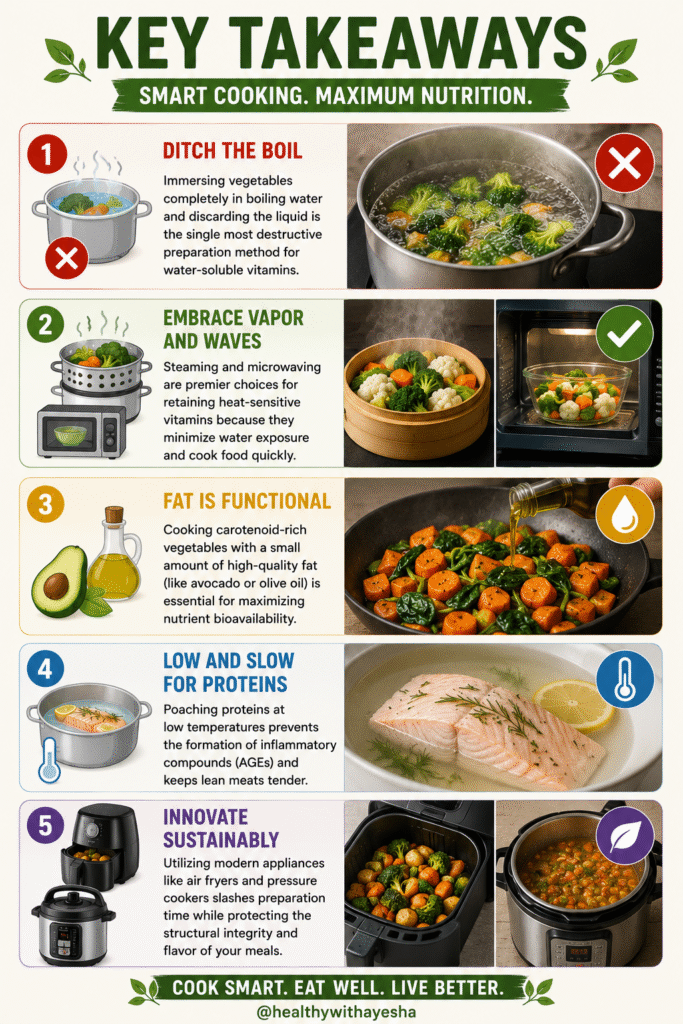
Maximizing your health requires more than just sourcing premium, wholesome ingredients; it demands that you protect those ingredients once they enter your kitchen. Transitioning away from aggressive, water-logged boiling and embracing healthy cooking methods like steaming, air frying, rapid sautéing, and precise poaching allows you to reclaim control over your nutritional health.
These techniques prove that you never have to make a choice between vibrant health and deep, satisfying flavor. By matching the right heat application to the right ingredient, you preserve delicate vitamins, unlock powerful fat-soluble antioxidants, and elevate the natural essence of your food.
Take action today! Tonight, skip the boiling pot. Try steaming your favorite greens or roasting your root vegetables with a light mist of avocado oil, and experience the incredible difference in flavor and vitality firsthand.
“Prep smarter, not harder! Tap to discover 15 gadgets that make healthy cooking a breeze.”
Frequently Asked Questions (FAQs)
1. Is it always healthier to eat vegetables raw rather than cooking them? No, this is a very common myth. While raw vegetables preserve 100% of their water-soluble Vitamin C, cooking actually unlocks other vital nutrients. For instance, cooking breaks down the rigid cellulose walls in carrots and tomatoes, significantly increasing your body’s ability to absorb fat-soluble antioxidants like beta-carotene and lycopene. A balanced diet should include both raw and properly cooked foods.
2. Does pressure cooking destroy nutrients because of the high heat? Surprisingly, no. Although pressure cookers operate at higher temperatures than standard stovetops, they reduce total cooking time by up to 70%. Because the food is exposed to heat for a drastically shorter period, and because the sealed chamber prevents nutrient-rich steam from escaping, pressure cooking ranks exceptionally high for vitamin retention.
3. What is the safest oil to use for high-heat healthy cooking methods? Avocado oil is the absolute safest choice for high-heat methods like roasting and stir-frying because it boasts an incredibly high smoke point of approximately 520°F (271°C). This stability prevents the oil from breaking down, oxidizing, and releasing toxic free radicals into your food. For low-to-medium heat methods, extra virgin olive oil is an excellent option.
4. How can I tell if I have overcooked my vegetables? Your eyes and your fork are your best indicators. If your green vegetables have turned a dull, muddy olive-brown color, or if they turn to mush when pierced with a fork, you have overcooked them. Perfectly cooked vegetables should retain a vibrant, bright coloration and offer a slight, crisp resistance when bitten.
5. Does microwaving food introduce dangerous radiation into my meals? Absolutely not. Microwave ovens utilize non-ionizing radio frequency waves that cause water molecules within the food to vibrate and generate heat through friction. They do not alter the cellular or chemical structure of the food any differently than standard thermal heat, and they leave zero residual radiation behind.