
Every single cell, tissue, and organ in your body relies on water to survive and function correctly. Yet, despite how essential this life-giving liquid is, one of the most common questions health professionals hear is exactly how much water to drink each day.
If you’re like most people, you’ve probably heard about the conventional “eight glasses a day” rule your whole life. You might carry around a massive reusable jug, hoping to hit a magical quota, or conversely, you might rely solely on coffee and soda, wondering why you constantly feel sluggish. The truth is, finding out how much water to drink is not a one-size-fits-all equation. Your daily hydration needs are incredibly dynamic. They fluctuate based on factors such as your age, gender, activity level, climate, and the specific foods you eat.
To read more articles, visit https://healthywithayesha.com/
In this comprehensive, science-backed guide, we will break down everything you need to know about optimal hydration. We will look past the generic advice, explore the deep biological mechanisms of hydration, and give you concrete strategies to calculate exactly how much water to drink to unlock peak physical and mental performance.
Why Your Body Craves Hydration
Before we can calculate your daily intake, it is crucial to understand why water is so fundamental to your existence. The human body is made up of roughly 60. Every second, this fluid conducts a symphony of essential cellular activities rather than merely swimming around aimlessly.
When you ask how much water to drink, you are essentially asking how much fluid is required to keep the following systems running smoothly:
Temperature Regulation: Water absorbs and transfers heat exceptionally well. When you heat up from exercise or a warm environment, your body produces sweat. As this sweat evaporates from your skin, it cools the body down, preventing fatal overheating.
Joint Lubrication: The cartilage found in your joints and the disks of your spine contain around 80% water. Long-term dehydration can reduce the shock-absorbing ability of joints, leading to severe joint pain and friction.
Cellular Waste Removal: Your kidneys are the master filtration system of your body, but they absolutely depend on adequate water to flush waste products from your blood through urine.
Meal prepping can make intermittent fasting easier. Check out 8 Surprising Benefits of Intermittent Fasting That Go Beyond Weight Loss
Nutrient Transportation: Blood plasma is about 90% water. This fluid serves as the highway system that transports oxygen, glucose, and essential nutrients to every cell in your body while carrying away carbon dioxide and cellular waste.
Cognitive Function: Your brain is roughly 73% water. Studies consistently show that even mild dehydration (losing just 1-2% of your body’s water content) can severely impair cognitive performance, disrupt your mood, and drastically reduce short-term memory.
If you want to feel energized, focused, and healthy, mastering your fluid intake is not optional—it is mandatory.
The Famous 8x8 Rule: Is It a Myth?
For decades, well-meaning doctors, fitness coaches, and health magazines have peddled the “8×8 rule.” This rule suggests that you should drink eight 8-ounce glasses of water every day, which totals 64 ounces (about 1.9 liters).
It is easy to remember, simple to track, and perfectly packaged for mass consumption. But is it scientifically accurate?
The short answer is no. There is surprisingly little hard scientific evidence backing the universal application of the 8×8 rule. Its exact origins remain a mystery, though many historians believe it stems from a 1945 recommendation by the U.S. Food and Nutrition Board, which stated that people need about 2.5 liters of water daily. However, the very next sentence in that historical report stated that most of this water is contained in prepared foods—a detail that the public entirely ignored.
While 64 ounces is a decent baseline for a small, sedentary person living in a cool climate, it is woefully inadequate for a tall athlete living in a hot, humid environment. If you want to know how much water to drink, you have to look beyond the 8×8 myth and look at modern physiological science.
Beat dehydration in the tastiest way — your 8 low-sugar drink ideas are just one click away!
Exactly How Much Water to Drink: The Scientific Guidelines
So, if eight glasses are not the gold standard, what is?
The most reliable baseline comes from the U.S. National Academies of Sciences, Engineering, and Medicine. Their extensive research determined that an adequate daily fluid intake is:
- For men: About 15.5 cups (125 ounces or 3.7 liters) of fluids a day.
- For women: About 11.5 cups (91 ounces or 2.7 liters) of fluids a day.
Note: These recommendations cover fluids from all sources, including plain water, other beverages (like tea and coffee), and the moisture found in food.
While these numbers are much higher than the 8×8 rule, they represent an “average” adult. To get a highly personalized number, many registered dietitians and sports scientists recommend calculating your baseline based on your total body weight.
Looking for simple ways to eat healthier? Discover the 7 healthy eating habits that transformed my daily routine.
Calculating Your Baseline Based on Body Weight
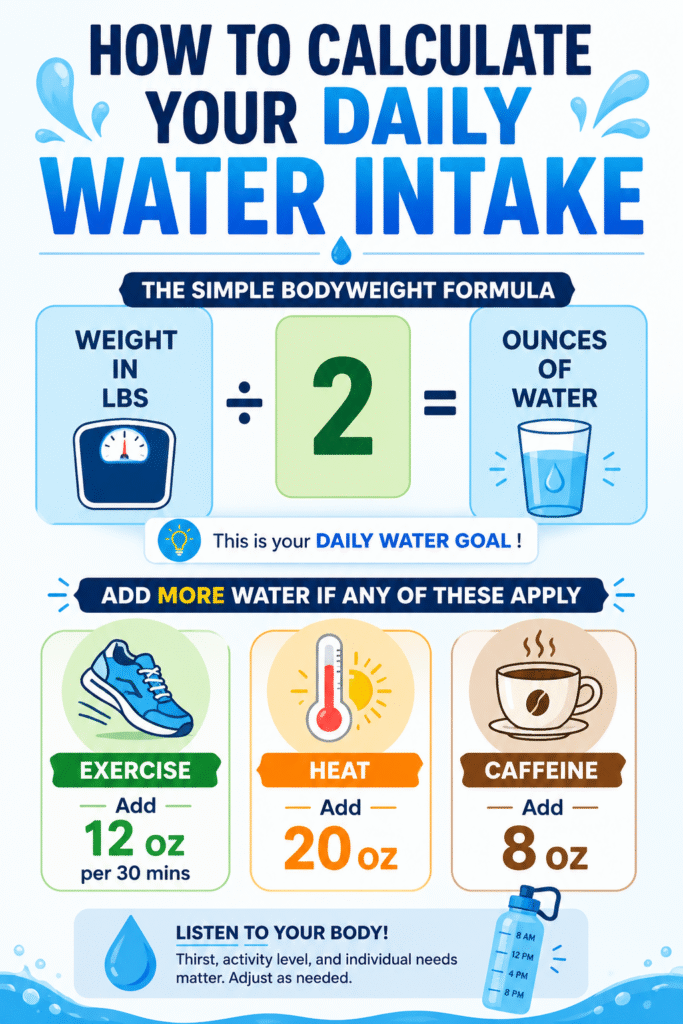
A highly effective and simple mathematical formula can help you determine precisely how much water to drink on a normal, resting day:
- Take your body weight in pounds.
- Divide that number in half.
- The resulting number is the minimum number of ounces of water you should drink daily.
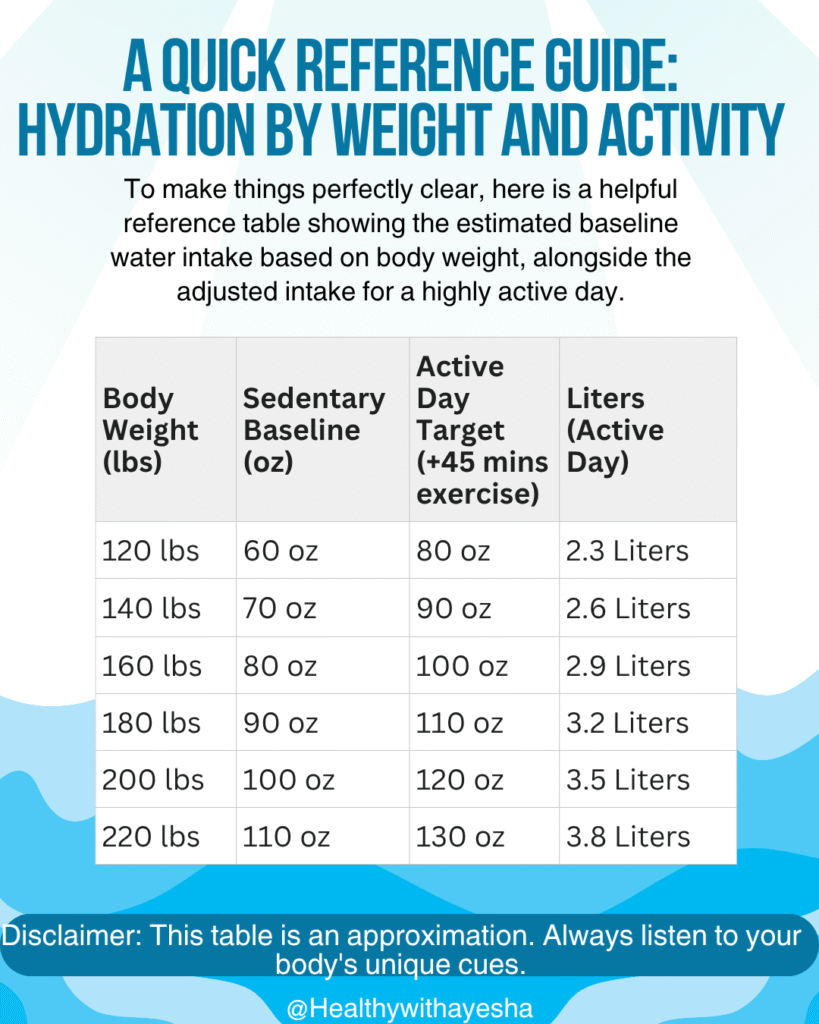
Real Example: If you weigh 160 pounds, divide that by two to get 80. Therefore, your baseline target should be 80 ounces (about 2.4 liters) of water per day.
If you use the metric system, a widely accepted formula is to drink roughly 30 to 35 milliliters of water per kilogram of body weight. Therefore, a person weighing 70 kg should try to consume between 2.1 and 2.45 litres of water every day.
This calculation gives you your foundational baseline. However, the final number will shift daily based on several dynamic lifestyle factors.
5 Crucial Factors That Change How Much Water to Drink
Your baseline requirement is only the starting point. Let us explore the five major variables that force you to increase your fluid intake.
1. Exercise and Physical Activity
Whenever you engage in physical activity that makes you sweat, you rapidly lose body water. If you want to avoid a massive drop in athletic performance, you must replace these fluids in real time.
The American Council on Exercise recommends a strategic approach to workout hydration. You should add roughly 12 to 20 ounces of water to your daily total for every 30 minutes of intense exercise.
For extreme endurance athletes, such as marathon runners or cyclists, simply drinking plain water is not enough. When you sweat profusely, you lose crucial electrolytes like sodium, potassium, and magnesium. Drinking massive amounts of plain water without replacing these minerals can lead to a dangerous condition, which we will discuss later in this post.
2. Environment and Climate
Your geographical location plays a massive role in how much water to drink.
- Hot, humid weather makes you sweat more actively, meaning your fluid requirements will skyrocket. However, do not underestimate the dehydrating effects of cold weather and high altitudes.
- In winter, indoor heating drastically reduces the moisture in the air, pulling water directly from your skin and respiratory tract.
- At high altitudes, the air is thinner and drier, prompting your body to breathe faster and deeper. This increased respiratory rate means you exhale a significant amount of water vapor with every breath, leading to rapid, invisible dehydration.
3. Overall Health and Illness
When you are sick, your body’s fluid requirements undergo a major shift.
- Fever, vomiting, and diarrhea result in a rapid and severe loss of fluids and essential electrolytes.
- During an illness, your doctor will likely tell you to increase your fluid intake drastically. This is because your immune system requires ample hydration to produce white blood cells and flush pathogens out of your system. In these scenarios, oral rehydration solutions—which contain a precise balance of water, sugars, and salts are vastly superior to plain tap water.
Furthermore, conditions like bladder infections and urinary tract stones require you to significantly up your water intake to flush out harmful bacteria and mineral deposits.
4. Pregnancy and Breastfeeding
Women who are pregnant or nursing require more fluids than the average population to stay healthy.
- The Office on Women’s Health advises pregnant women to consume at least 10 cups (80 ounces) of fluids daily.
- This extra water is essential for forming amniotic fluid, producing extra blood volume, and carrying vital nutrients to the developing baby.
- For women who are breastfeeding, the requirement jumps even higher—to about 13 cups (104 ounces) a day—because breast milk is composed of nearly 90% water.
5. Your Diet and Beverage Choices
The types of food and drinks you consume heavily dictate your hydration status.
- Beverages containing heavy amounts of caffeine (like strong coffee and energy drinks) or alcohol act as mild diuretics. A diuretic is a substance that signals your kidneys to release more water through urine. If you consume a lot of alcohol or heavily caffeinated drinks, you will likely need to drink extra plain water to offset the diuretic effect.
- Conversely, eating a diet rich in high-water-content foods can actively lower the amount of liquid water you need to drink from a glass.
Does Food Count Toward Your Daily Intake?
When calculating how much water to drink, many people forget that they actually eat a massive portion of their daily fluids.
Under normal circumstances, approximately 20% of your daily water intake comes directly from the food on your plate. Fruits and vegetables are essentially edible water bottles packed with vitamins, fiber, and electrolytes.
Consider integrating these incredibly hydrating foods into your daily routine:
Cucumbers: 96% water
Watermelon: 92% water
Spinach: 91% water
Strawberries: 91% water
Cantaloupe: 90% water
Peaches: 89% water
By eating a large salad or a bowl of fresh fruit, you are organically boosting your hydration levels while also absorbing structured cellular water, which your body can utilize very efficiently.
7 Warning Signs You Are Not Drinking Enough Water
Relying purely on math can sometimes be restrictive. The human body is highly intelligent and possesses a built-in alarm system to warn you when your fluid levels drop dangerously low.
However, relying strictly on “thirst” is a flawed strategy. By the time your brain triggers the conscious sensation of thirst, you are already mildly dehydrated. As you age, your natural thirst mechanism actually weakens, making older adults highly susceptible to chronic dehydration.
Instead of waiting to feel parched, watch out for these seven warning signs that you are not drinking enough water:
Dark Colored Urine: This is the ultimate, undeniable test of hydration. If your urine is dark yellow or amber, you are dehydrated. Healthy, optimal hydration produces urine that is a pale, transparent yellow (like light lemonade).
Persistent Bad Breath: Saliva has antibacterial properties that keep your mouth clean. Dehydration halts saliva production, allowing odor-causing bacteria to thrive and multiply rapidly in your mouth.
Chronic Fatigue and Lethargy: If you feel an afternoon slump every day, reach for water before espresso. A drop in blood volume means your heart has to work overtime to pump oxygen to your brain, leaving you feeling exhausted.
Dry, Flaky Skin: Your skin is your body’s largest organ. When severely dehydrated, your body restricts water from the skin to protect vital internal organs, leaving your complexion dull, tight, and prone to wrinkling.
Frequent Headaches: The brain is encased in a protective layer of fluid. When you are dehydrated, this fluid volume drops, which can literally cause the brain to pull away from the skull slightly, triggering vicious tension headaches and migraines.
Sugar Cravings: When you are dehydrated, it becomes incredibly difficult for your organs to release glycogen (stored glucose). As a result, you might experience sudden, intense cravings for sugar or carbohydrates when your body actually just needs a glass of water.
Muscle Cramps: Sweating out fluids and failing to replace essential electrolytes like sodium and potassium cause nerve pathways to misfire, resulting in painful, sudden muscle spasms.
“Stop starving, start thriving — find out why low-calorie eating beats every fad diet out there!”
Can You Drink Too Much Water? The Dangers of Hyponatremia
While dehydration is a widespread issue, there is a dangerous counter-trend in the fitness community: over-hydration. More is not always better.
When you drink extreme, massive quantities of plain water in a very short period, your kidneys cannot flush it out fast enough. The excess water rapidly dilutes the sodium levels in your bloodstream. This condition is known as hyponatremia, or water intoxication.
Sodium is an essential electrolyte responsible for regulating the balance of fluids in and around your cells. When sodium levels crash due to overhydration, fluids rush inside your cells to balance the concentration, causing the cells to swell dramatically.
When muscle or fat cells swell, it is uncomfortable. When brain cells swell, it is life-threatening. The pressure inside the skull increases rapidly, leading to nausea, confusion, seizures, coma, and in extreme cases, death.
Hyponatremia is most common among amateur marathon runners who obsessively chug water at every single rest stop without consuming any sodium. A good rule of thumb to prevent this is to never drink more than 0.8 to 1.0 liters of water per hour, as this is the maximum rate your kidneys can process fluid.
Actionable Hacks to Hit Your Hydration Goals Every Day
Knowing how much water to drink is the easy part; the difficult part is actually building the habit of drinking it consistently. If you struggle to get your daily ounces in, try implementing these proven, practical hacks into your lifestyle:
The Morning Ritual: Keep a large glass of water on your nightstand. As soon as you wake up, before you check your phone or make coffee, drink 16 ounces of water. This immediately flushes your system and rehydrates you after 8 hours of sleep.
Invest in a Smart Water Bottle: Buy a large, high-quality reusable bottle that has time markers printed on the side. These markers give you micro-goals to hit by 10 AM, 12 PM, and 2 PM, keeping you on track all day long.
Infuse Your Water: If you hate the taste of plain tap water, do not force it down. Infuse your pitcher with natural flavors. Try combinations like lemon and mint, cucumber and basil, or crushed berries.
Tie Hydration to a Habit: Link drinking water to things you already do automatically. For example, drink a full glass of water every time you brush your teeth, every time you sit down to eat a meal, or every time you finish using the restroom.
Eat Your Water: As mentioned earlier, actively add cucumbers, tomatoes, and watermelon to your daily diet to sneak in extra fluids effortlessly.
Conclusion: Listen to Your Body's Unique Rhythm
There is no magical, universal answer to exactly how much water to drink each day. While the old eight-glasses-a-day rule is a nice sentiment, true optimal hydration requires a more personalized approach.
By calculating your baseline using your body weight, factoring in your exercise routine, and paying close attention to your body’s biological signals—especially the color of your urine and your energy levels—you can achieve perfect hydration.
Water is the foundation of human health. When you provide your body with the exact amount of fluid it needs, you will experience sharper mental focus, better digestion, glowing skin, and boundless physical energy.
Stop guessing and start tracking. Grab a glass of water right now, and take the first step toward a more vibrant, hydrated life.